How Today’s Restaurant Managers Shape Performance, Profitability And Long-Term Growth
The Restaurant Manager’s role has evolved far beyond overseeing service. Today’s most effective managers operate as commercial leaders, balancing exceptional guest experiences, with revenue generation, cost control and operational performance. This is where service excellence and commercial strategy converge.
In today’s restaurant environment, performance is shaped in real time, on the floor. Decisions around service pacing, table utilisation, team deployment, product recommendations and guest engagement can directly influence revenue, costs and long-term brand value.
Restaurants that continue to treat managers primarily as shift supervisors, risk leaving valuable revenue opportunities untapped. Those that empower them with commercial responsibility, create a stronger link between what happens on the floor and the financial performance of the restaurant.

A commercially aware Restaurant Manager therefore looks beyond whether service is simply running smoothly. They understand what is selling, what is profitable, where capacity is being lost, how effectively the team is selling, and where the guest experience can create additional value.
Service Is An Essential Revenue Lever

Service is no longer simply about delivering a great guest experience. It is also a controllable revenue lever, and managers who understand sales mix, menu engineering and upselling behaviour can turn everyday guest interactions into genuine revenue opportunities. Through precise coaching on timing, product knowledge and guest cues, they can directly influence:
- Average check value
- Beverage and dessert attachment rates
- Repeat visit frequency
- Online ratings and guest loyalty
When service standards align with commercial objectives, the floor shifts from reactive execution to intentional revenue generation.
Guest Psychology Drives Higher Spend
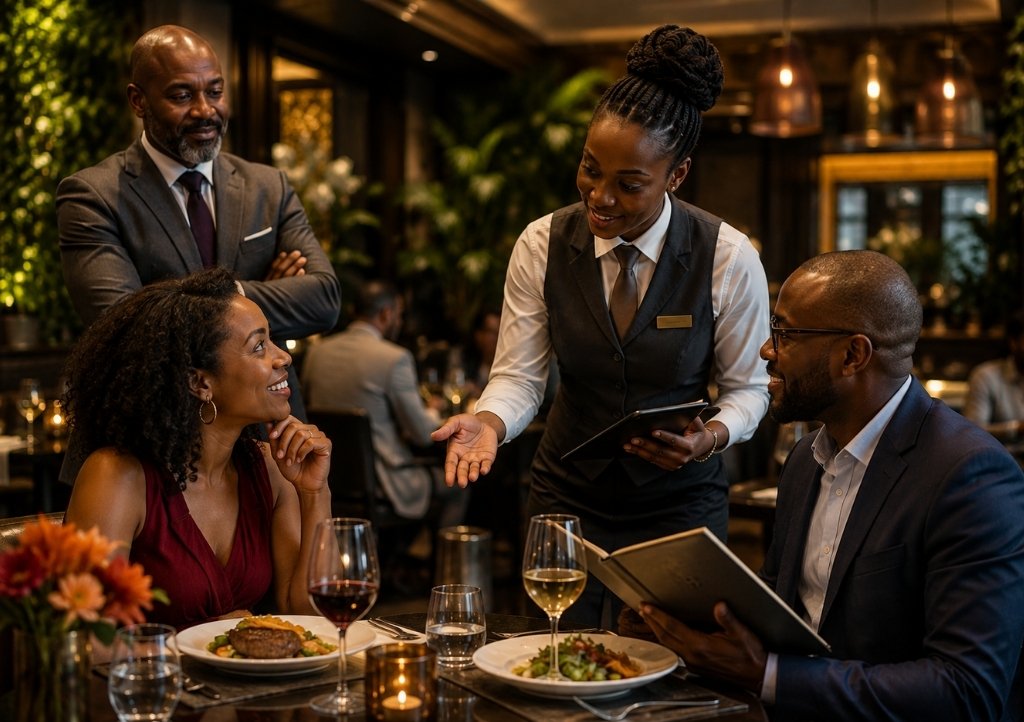
High-performing managers do not rely on instinct alone—they understand guest behaviour.
Knowing when guests are most receptive to recommendations, how menu presentation influences decisions, and how atmosphere, service, timing and interaction affect purchasing behaviour, allows teams to create commercial opportunities naturally rather than forcing the sale.
Restaurants that consistently deliver these types of stronger guest experiences, generate greater customer loyalty, more repeat business, and ultimately an increase in the amount diners spend.
Table Flow Is Revenue Control
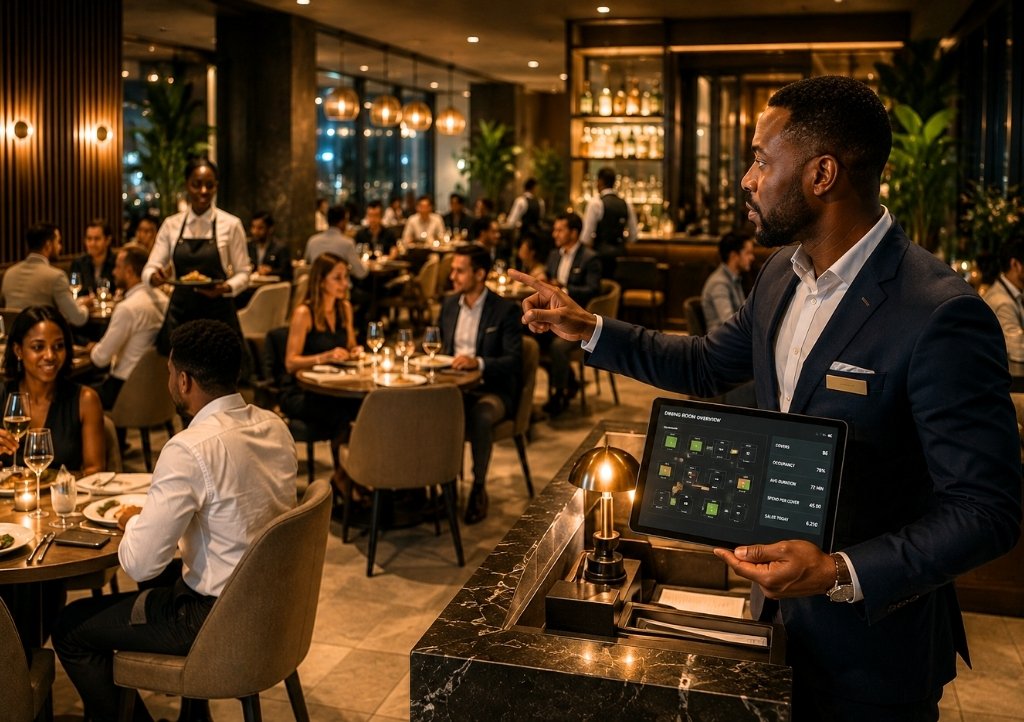
Table management is more than logistics—it directly influences how much revenue a restaurant can generate from every service.
Table turn times, reservation pacing, waitlist management and seating flow all determine how effectively a restaurant converts available seats and trading hours into revenue. Small improvements in table utilisation can produce meaningful gains in nightly performance without adding a single additional seat.
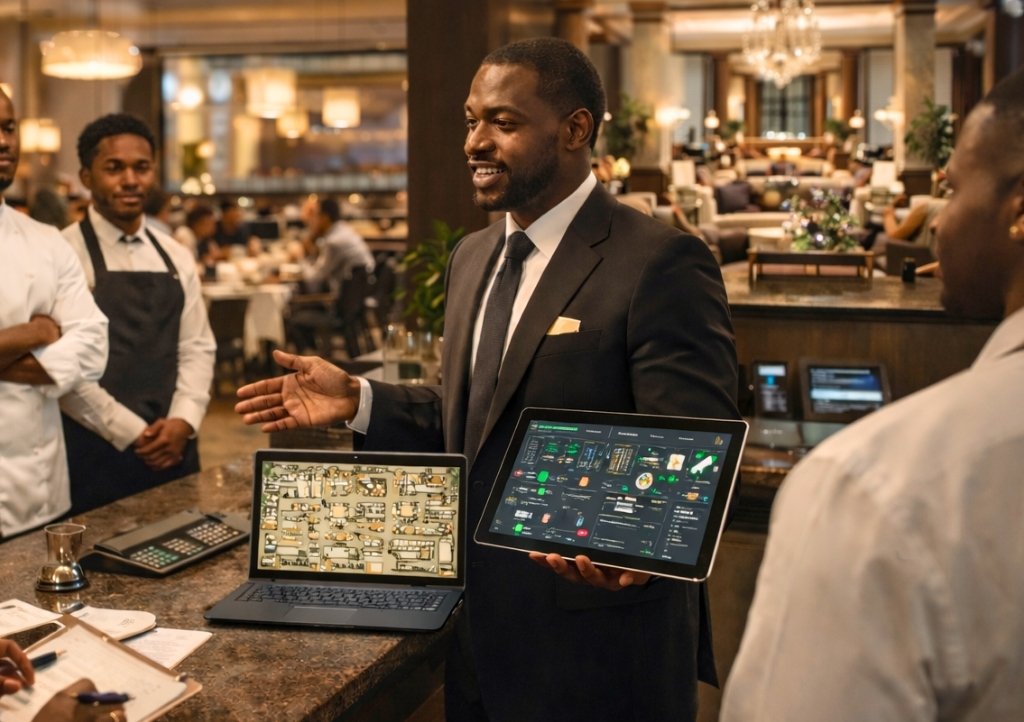
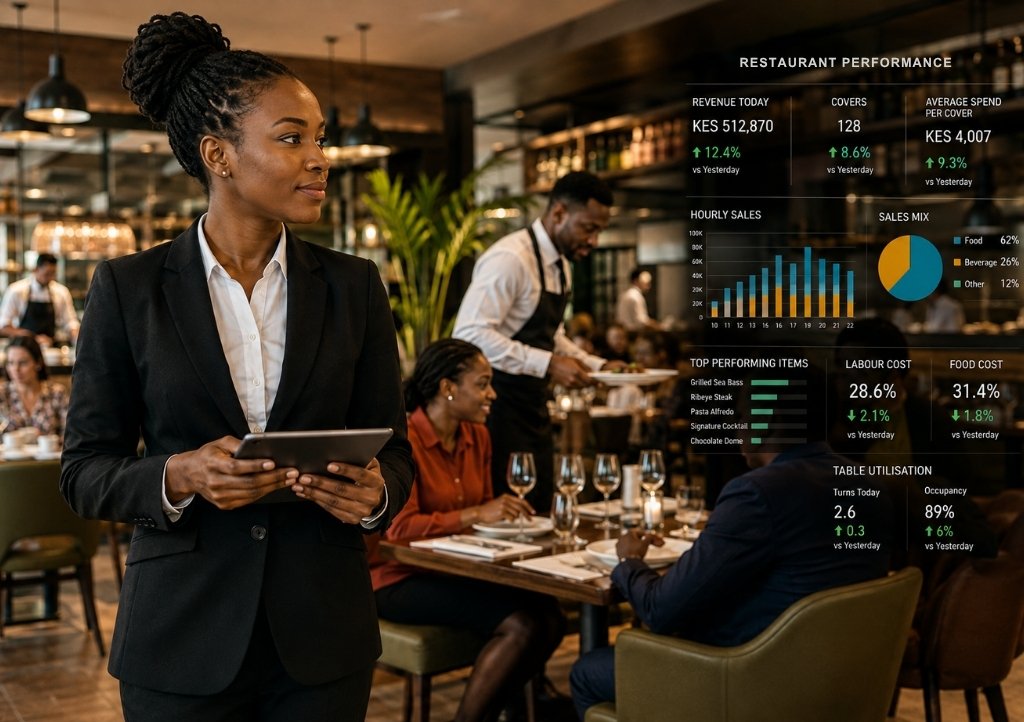
Real-time operational data makes this increasingly visible. Managers can monitor indicators such as table duration, covers, spend per cover, sales by service period, as well as service bottlenecks, allowing them to intervene while the shift is still underway.
Your floor plan should not be static. When effectively created and managed in the right way, it becomes a great revenue-producing asset.
Financial Literacy Defines Leadership

The difference between average and high-performing managers, is financial awareness.
Today’s Restaurant Manager operates across 3 Connected Pillars:
Operational Control
Scheduling, cost discipline, and consistency.
Guest Experience Leadership
Team culture, service standards, and reputation.
Revenue Strategy
Sales analysis, margin control, and accountability.
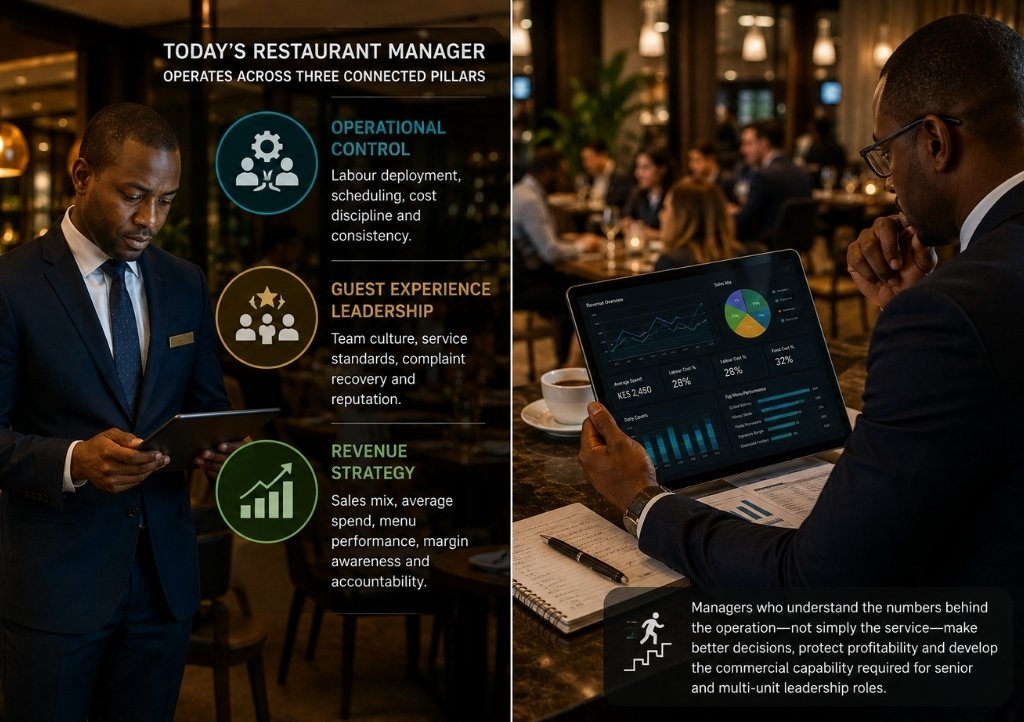
Managers who understand numbers—and not just service—make better decisions, protect profitability, and position themselves for senior leadership and eventually multi-unit roles.
Static Managers Fall Behind
A static approach to restaurant management, simply put, no longer works.
Performance should be monitored throughout the trading day. Significant variances should be investigated quickly, while labour deployment, service pacing and sales priorities should respond to actual trading conditions.
Restaurant Managers who merely supervise the shift, react to what has already happened.
Commercial operators observe, adjust, optimise, and execute, continuously.
A Smarter Model For Restaurant Performance
 Are You A HORECA PROFESSIONAL?
Claim Your FREE HORECA KE Membership Here >>> https://www.horecaafrica.com/professionals
 Are You A HORECA SUPPLIER?
Join The HORECA KE SUPPLIER Network Here >>> https://www.horecaafrica.com/suppliers
To Stay Ahead In The HORECA Industry